How Do I Know If a CBD Product Is Really THC-Free?
A “THC-free” claim is only as useful as the test behind it. The label might describe the formula, the finished product, or simply a marketing goal. To check what is actually in the item you’re buying, match its batch number to a recent certificate of analysis (COA), look at the lab’s THC results and detection limits, and make sure the test covers the finished product—not just an ingredient used to make it.
This matters because “THC-free” does not always mean the same thing as “no THC molecules detected.” Some brands use it to mean no detectable delta-9 THC; others may mean that THC is below a legal or internal threshold. And a result for delta-9 THC alone may not tell the whole story if the product contains THCA, which can convert to delta-9 THC when heated.
Use the checks below as a practical THC-free label check. They can help you assess the label and lab paperwork, but they cannot guarantee how a product will affect you or what a particular drug test will detect.
Start With the Exact Product and Batch
Before scanning a QR code or reading a marketing page, find the product’s batch or lot number. It may be printed COA QR code verification on the bottle, carton, pouch, or a small sticker. Then check that the COA identifies the same product and batch.
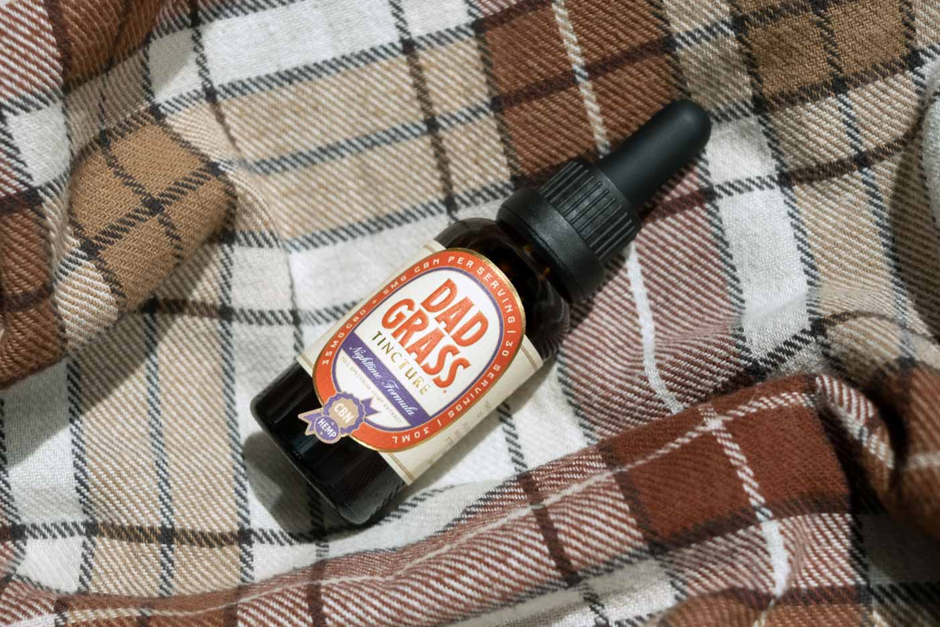
A report for the brand’s hemp extract, a different flavor, or an earlier production run is not proof about the item in your hand. Batch matching is one of the simplest—and most commonly skipped—steps in verifying a product.
A QR code COA lookup can make it easy to reach a report, but the code itself is not evidence that the report is current or relevant. Confirm that the page or PDF shows:
- The product name or a clear product identifier
- The matching batch or lot number
- The date the sample was received or tested
- The laboratory’s name and contact information
- Results for delta-9 THC and, where available, THCA
- A detection or quantitation limit for the reported results
If the QR code opens a general brand page, a report for a different batch, or a document with no product identifiers, ask the company for the matching COA. If it cannot provide one, treat the THC-free claim as unverified.
Read the Cannabinoid Results, Not Just the Front Label
A third-party lab test provides an independent measurement, but the words “third-party tested” alone do not tell you what was tested or found. Open the cannabinoid section of the COA and look for the specific analytes—especially delta-9 THC and THCA.
COA term What it tells you What to check Delta-9 THC The measured amount of delta-9 tetrahydrocannabinol in the sample. Is it listed as “ND,” or is a numeric amount reported? What is the lab’s detection limit? THCA The acidic precursor that can convert to delta-9 THC when heated. Is it tested and reported separately, or missing from the cannabinoid panel? Total THC An estimate that accounts for delta-9 THC and the potential delta-9 THC formed from THCA. Does the report explain how it was calculated, and are the underlying results shown? ND / non-detect The analyte was not detected above the method’s stated detection capability. What is the limit of detection (LOD) or limit of quantitation (LOQ)? “ND” does not necessarily mean absolute zero.“Non-Detectable” Has a Limit
A non-detectable THC COA is stronger evidence than a label that merely says “THC-free,” but it still needs context. “ND” means the lab did not detect the target compound above a specified threshold using that method. It does not prove that no molecule is present at any level.
Look for the lab’s limit of detection (LOD) or limit of quantitation (LOQ). The LOD is the level at which the method can identify a compound as present; the LOQ is the level at which it can quantify it with stated reliability. Labs and methods differ, so an ND result is more informative when the report makes these limits clear.
Also check the units. Results may be shown as a percentage, milligrams per gram, or milligrams per serving. Those figures are not interchangeable without knowing the product’s weight and serving size. If you are trying to estimate the amount in the entire bottle, the COA or label should give enough information to make that calculation—or the company should explain it.
Delta-9 THC Is Not the Same as Total THC
Have a peek at this websiteSome labels and reports emphasize only delta-9 THC. That may leave out THCA, a naturally occurring cannabinoid in hemp and cannabis. THCA is not the same compound as delta-9 THC, but heat can convert THCA into delta-9 THC. That conversion is why total THC calculations commonly account for both compounds.
A commonly used calculation is:
Total THC = delta-9 THC + (THCA × 0.877)
The factor accounts for the loss of mass when THCA converts to delta-9 THC. A COA may use a different presentation or calculation, so read the lab’s notes rather than assuming every report uses the same format.
For a product marketed as THC-free, a delta-9-only result deserves a closer look if THCA is not listed. Ask whether the lab tested for THCA and whether the brand’s “THC-free” definition includes total THC. If a company says “zero THC” while its report shows THCA—or does not test for it—that is a meaningful gap, not a minor paperwork detail.
Understand the Federal Hemp Definition Rewrite
Federal hemp rules have been changing, and the word “hemp” on a package should not be treated as proof that a product contains no THC. A federal hemp definition rewrite is scheduled to change how certain hemp-derived products are treated. The change includes a per-container THC threshold of 0.4 mg and updated language addressing THC and related cannabinoids. The scheduled effective date is November 12, 2026; check current federal guidance and your state’s rules because implementation and state restrictions may affect what is sold where.
The 0.4 mg figure is a legal threshold tied to the updated definition—not a universal promise that a product is THC-free, safe for every consumer, or undetectable on a drug test. A product could contain measurable THC and still fall below a particular threshold. Conversely, a product’s legal status does not tell you what the lab found in your specific batch.
Keep three questions separate:
- What is in the product? Check the batch-specific COA.
- How is the product classified under current law? Check current federal and state rules.
- Does it meet your personal needs? Consider sensitivity, work or testing requirements, medications, and advice from a qualified clinician.
Public discussion of hemp policy often involves Congress and the White House, but headlines such as “hemp ban” can obscure what a bill or rule actually changes. Look for the effective date, the products covered, the specific THC measurement, and whether the rule uses a per-serving or per-container limit. Do not assume a proposed change is already in force—or that a legal threshold means “THC-free.”
Full-Spectrum, Broad-Spectrum, and Isolate Are Not Interchangeable
Product type can offer clues, but it is not a substitute for test results:
- Full-spectrum CBD generally includes multiple hemp compounds and may contain THC within applicable limits. It is not the best choice if you require a product with no detectable THC.
- Broad-spectrum CBD is typically processed to remove THC, but the claim needs confirmation from a batch-specific COA. “Broad-spectrum” does not guarantee a non-detect result.
- CBD isolate is intended to contain CBD without other cannabinoids, but contamination or manufacturing variation is possible. Verify the finished product, not just the isolate ingredient.
These are common product descriptions, not standardized guarantees of a particular test result. A finished gummy, tincture, or topical can differ from the extract used to make it. Flavorings, carrier oils, and production equipment can also affect the final formulation.
A Practical THC-Free Label Check
- Find the batch number. Make sure it is legible and matches the COA.
- Open the full report. Do not rely only on a QR-code preview or a badge saying “lab tested.”
- Check the sample identity. Confirm the report is for the finished product and the exact batch.
- Find delta-9 THC and THCA. A delta-9 result by itself may not answer the total-THC question.
- Read the units and limits. Look for the LOD or LOQ and confirm whether results are per gram, serving, or another unit.
- Compare the report with the label. If the label claims “THC-free” but the COA reports THC, ask the manufacturer what that claim means.
- Check when the sample was tested. A report should be relevant to the batch being sold, not simply the newest report on the brand’s website.
- Ask about the method. If the report is unclear, ask which test method was used and whether it measured both delta-9 THC and THCA.
Questions to Ask a CBD Brand
Clear answers are a good sign. You can ask:
- “Does ‘THC-free’ mean no detectable delta-9 THC, no detectable total THC, or something else?”
- “Can you send the COA for the batch number on my package?”
- “Was the finished product tested for both delta-9 THC and THCA?”
- “What are the lab’s detection or quantitation limits?”
- “Are the results listed per serving or for the whole container?”
Brands such as Joy Organics may publish product testing information for shoppers to review. Regardless of brand, apply the same standard: check the actual batch, read the analytes, and confirm what “THC-free” means in the company’s own labeling. A polished product page is not a substitute for a clear report.
Red Flags That Deserve a Follow-Up
- The COA has no matching batch number.
- The report tests only the hemp extract, not the finished product.
- Delta-9 THC is shown, but THCA is omitted without explanation.
- The brand says “zero THC” but provides no detection limit or test method.
- The QR code leads to a generic page or a report for another product.
- The company treats a legal threshold as proof that no THC is present.
None of these points automatically proves a product is unsafe or mislabeled, but each is a reason to ask for clarification. If the company will not explain its claim or supply a relevant COA, consider choosing a product with more transparent testing.
The Bottom Line
To know whether a CBD product is really THC-free, do not stop at the front-label claim. Match the batch number to a current certificate of analysis, check both delta-9 THC and THCA, and read the lab’s detection limits and units. A non-detect result supports a claim of “no THC detected by this method,” not absolute zero.
Finally, keep testing evidence separate from legal definitions. The federal hemp definition rewrite and its 0.4 mg per-container threshold may affect how certain products are classified, but they do not replace batch testing or define what every shopper means by “THC-free.” When the label and COA do not tell the same story, ask the manufacturer before buying.